

Table of Contents
- Introduction Why Real Estate Investment Germany Attracts Expats and Global Investors
- German Real Estate Market Overview and Investment Opportunities
- How to Buy Property in Germany Step by Step
- Apartment Ownership Structure Germany
- The Teilungserklärung Document Every Apartment Buyer Must Understand
- Voting Power and Decision Making in Apartment Buildings
- Legal Documents to Check Before Buying an Apartment in Germany
- Costs and Financial Planning for Real Estate Investment Germany
- Real Estate Investment Strategies in Germany
- Common Risks When Buying Property in Germany
- How Finance for Expats Can Help Property Investors
- Frequently Asked Questions: Real Estate Investment Germany
- Conclusion: Real Estate Investment Germany for International Buyers
Guide for Expats Buying Apartments and Property
The European property scene is full of various opportunities, but there are very few options that feel as solid as real estate investment in germany. For both expats and global investors, the german real estate market has become a reliable symbol of stability and consistent growth over the long haul. Whether your goal is to buy apartment in Munich or you find yourself drawn to the trendy apartments in Berlin, getting a handle on the local details is the first step toward success.
This guide dives deep into the real estate investment landscape in germany, focusing specifically on the unique legal structures that define property ownership in germany.
Introduction: Why Real Estate Investment Germany Attracts Expats and Global Investors
When considering an investment real estate move, stability is often the primary concern. Germany is widely recognized as one of the most dependable property markets in Europe, largely thanks to its steady economy and careful approach to lending. If you are exploring how to invest in real estate in germany, the main draw is the obvious gap between the high demand for homes and the limited supply available.
In most major cities, there is a notable shortage of housing, which keeps rental demand very high. This setup makes real estate investment in germany a great choice for anyone looking for consistent rental income or a way to protect their wealth over many years.
As an expat, navigating this market requires more than just capital, it requires an understanding of apartment ownership and the specific legalities of the german real estate market.
In this guide, we will explore the apartment purchase process in germany, the intricate three layer legal structure of buildings, and the essential property documents for germany you must review. If you are ready to see what is currently on the market, you can explore available properties through our Real Estate Search Engine.
German Real Estate Market Overview and Investment Opportunities
The german real estate market is not a single entity but a collection of diverse micro markets. From the financial hub of Frankfurt to the tech driven scene in Berlin, real estate in germany offers various entry points for an investment real estate strategy.
Understanding the German Real Estate Market
The stability of the german real estate market is rooted in its tenant nation culture. Unlike many other countries where homeownership is the default, a large portion of the German population rents, ensuring a consistent property investment demand. Long term urbanization trends continue to push people toward A Cities, keeping the real estate investment germany outlook positive despite global economic shifts. This market attracts international investors because it acts as a safe haven, offering protection against volatility seen in more speculative markets.
Best Cities for Real Estate Investment Germany
When you decide to pursue real estate investment in Germany, location is everything.
Apartments inBerlin: The capital remains a hotspot due to its international population and intense rental demand.
Buy apartment in Munich: Munich is the property gold standard, offering premium valuations and incredibly strong long term value preservation.
Frankfurt and Hamburg: These economic centers provide excellent property investment opportunities in Germany for those looking for corporate tenants and professional real estate investment management environments.
Investors comparing apartments in Berlin, buy apartment in Munich opportunities, or property Germany options in other economic centers should always compare local rental demand, pricing and ownership structures carefully.
To find the best deals in these major cities, make sure to use the Real Estate Search Engine.
How to Buy Property in Germany Step by Step
Getting to know of how to buy an apartment in Germany means following a very particular set of steps. While the system is set up to keep both the buyer and seller safe, it can definitely feel a bit overwhelming if you are navigating it as an expat.
Finding a Property: Your first move is to set up some viewings and find a condo germany that actually lines up with your budget.
Legal Due Diligence: Before you commit, you must perform a thorough check of all property documents germany.
Financing: Securing mortgage approval is a critical step. When discussing financing and your potential ROI, reference our Property Investment Calculator to see the numbers clearly.
The Notary: In german property law, a notary must oversee the signing of the purchase contract.
Ownership Transfer: The final step is the land registry entry, which officially confirms your property title in Germany.
Whether you want to buy house in Germany or a city apartment, following these steps ensures your apartment purchase is legally sound. Whether you are focused on buying apartment in Germany or long term ownership in a larger property market, the process remains highly structured. Use our Property Investment Calculator to unlock insights into your returns and make smarter financial decisions.
Apartment Ownership Structure Germany
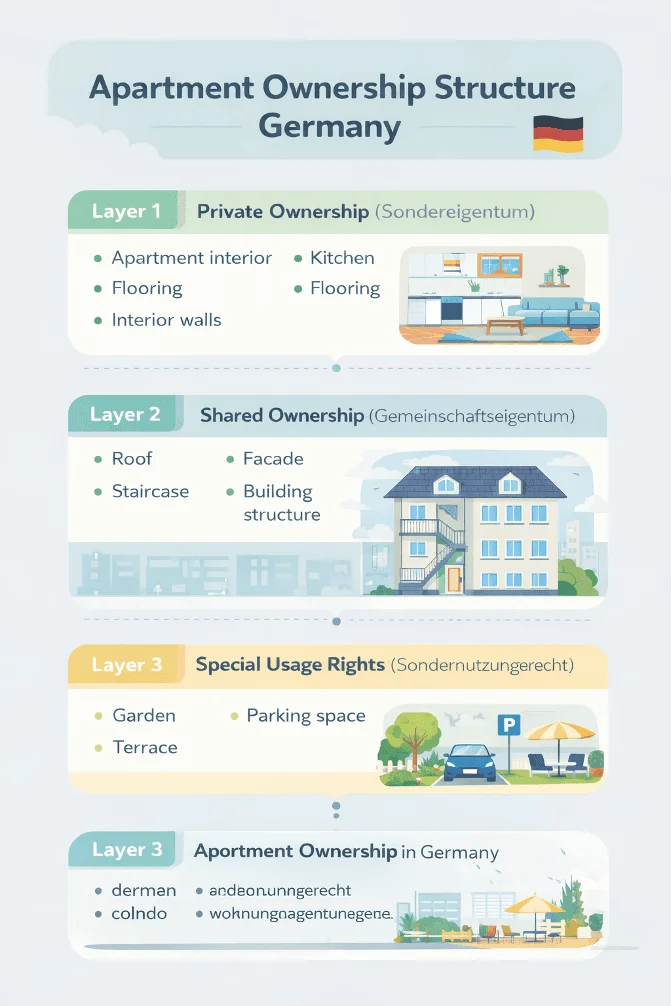
In most German cities, apartment ownership in Germany is much more common for investors than purchasing standalone houses. This is typically organized as condominium style ownership, which is governed by the Wohnungseigentumsgesetz. It is important to realize that property ownership in Germany in a multi family building is not a single layer, it is actually divided into three distinct categories.
This form of shared property ownership is one of the most important concepts for expats buying into multi family buildings.
The Three Layers of Ownership in German Apartment Buildings
To truly master apartment ownership in Germany, you must understand these three legal terms:
Sondereigentum: This refers to your private ownership of the apartment interior, including the flooring, interior walls, and the kitchen.
Gemeinschaftseigentum: This covers the shared building components. This includes the roof, the facade, the staircase, and the central heating system. You own a share of these, but decisions are made collectively.
Sondernutzungsrecht: These are special usage rights. For example, you might have the exclusive right to use a specific garden, parking space, or terrace, even though they are technically part of the shared property.
The ownership structure in German apartment buildings can therefore only be understood properly when private ownership, shared ownership, and special usage rights are viewed together.
The Teilungserklärung Document Every Apartment Buyer Must Understand
The Teilungserklärung is perhaps the most important of all property documents in Germany. This document defines the exact ownership structure within the building. It regulates the rights, obligations, and physical boundaries of each apartment in Germany.
Essentially, the Teilungserklärung functions as the constitution for the building's homeowners association in Germany. As an investor, you must review this document before purchasing to ensure there are no hidden restrictions on how you can use your property in Germany.
It is also one of the key documents that helps buyers understand voting power, ownership shares, and the internal rules of the building community.
Understanding German Property Rules
Before we move forward, it is helpful to see these concepts in action. The following video explains ownership layers, voting power, building rules and common risks associated with the German Real Estate market.
Understanding these "layers" of ownership is the key to avoiding disputes with your future neighbors and ensuring your real estate investment germany remains profitable.
Voting Power and Decision Making in Apartment Buildings
When you enter into apartment ownership in Germany, you become part of a community. Decisions regarding the building are not made in isolation. Instead, shared property ownership involves regular meetings where owners vote on building maintenance, renovations, and budget allocations.
Your property ownership rights and voting weight are often determined by your share of the total building, as defined in the Gemeinschaftsordnung. This set of rules defines the procedures for how the building is managed.
This is why understanding both the Teilungserklärung and the Gemeinschaftsordnung is so important before committing to apartment ownership in Germany.
Legal Documents to Check Before Buying an Apartment in Germany
To protect your real estate investment in germany, you must verify several key property documents germany:
Teilungserklärung: To understand the division of the building.
Aufteilungsplan: The building division plan showing the layout.
Land registry germany entry: This confirms the current property title germany and any existing debts on the property.
Building meeting protocols: These show past decisions and potential future costs.
Maintenance reserve fund: Documentation showing how much money is saved for future repairs.
These property documents german investors review are essential for understanding property title germany, legal rights and future obligations.
Reviewing these prevents property law surprises and financial risks later on.
Costs and Financial Planning for Real Estate Investment Germany
A successful Real Estate investment requires a clear view of the total costs. Beyond the purchase price, you must account for:
- Notary fees and land registry fees in Germany.
- Property transfer tax, which varies by federal state.
- Ongoing costs like the maintenance reserve fund and the monthly housegeld.
These costs directly impact your rental yield. Ongoing costs such as Housegeld and reserve fund contributions should always be included in any real estate investment calculation. To get an accurate picture of your returns, use the Property Investment Calculator.
Real Estate Investment Strategies in Germany
There are several ways to approach how to invest in real estate in Germany. Many expats choose a long term rental strategy, focusing on steady income. Others look for capital appreciation in high growth areas of the german Real Estate Market. Whether you are looking at a real estate investment fund or direct apartment ownership, you must compare rental yields and property types across different cities to maximize your potential.
Comparing city profiles, purchase costs, and long term demand can make a major difference when evaluating real estate investment opportunities in Germany.
Common Risks When Buying Property in Germany
While the market is remarkably stable, property law in Germany can be quite a maze to navigate. Some of the most frequent risks involve being hit with surprise repair bills in older structures or simply misunderstanding what your property ownership duties actually entail. It is also vital to keep an eye on strict rules against short term rentals in places like Berlin, or the presence of shops within a residential building, which can complicate your condominium bylaws. Taking the time for a meticulous document check is truly the only way to steer clear of these issues.
How Finance for Expats Can Help Property Investors
Managing a Real Estate investment project in Germany vas someone from abroad is a major undertaking. From getting your head around german property law to spotting the best Real Estate deals in Germany, having professional support is a massive advantage. If you find yourself needing a hand with checking out a specific property or making sense of legal files, feel free to get in touch with our experts through the contact page for some direct advice.
Frequently Asked Questions: Real Estate Investment Germany
Is Real Estate Investment Germany a Good Idea for Expats?
It is generally a solid move because the market is so steady. The high demand and the protections built into german property law make it a very safe bet if you are looking for long term security.
Can Foreigners Buy Property in Germany?
Yes, they can. Germany doesn't have restrictions on foreign property ownership in Germany, which makes it a top destination for investors from all over the world.
How Much Deposit Is Required to Buy Property in Germany?
The amount varies, but banks usually want to see a good chunk of your own cash up front, especially if you don't live in the country.
What Documents Are Required to Buy Property in Germany?
The heavy hitters are the land registry extract and the Teilungserklärung, which details exactly how the building is split up.
Which Cities Are Best for Real Estate Investment in Germany?
Berlin, Munich, and Frankfurt are still the leading spots for Real Estate investment in Germany because their local economies are so incredibly robust.
Conclusion: Real Estate Investment Germany for International Buyers
Winning at Real Estate investment in Germany really comes down to how well you prepare. Getting a firm handle on the unique apartment ownership setup and the essential paperwork required by the german real estate market puts you in a fantastic spot to grow your wealth. The key is to be incredibly thorough with your due diligence, stay grounded and realistic about the potential returns, and always keep your eyes on the long term horizon.
If you want to take the next step, you can explore available listings through the Real Estate Search Engine, review potential returns with the Property Investment Calculator, or reach out through the contact page for tailored guidance.