


KfW funding has become one of the most important tools for property buyers in Germany. Especially after the sharp rise in interest rates over the past years, government backed loans and subsidies are no longer a niche topic. In 2026 they are a central part of many financing conversations.
As a financial expert working with expats and international buyers in the German real estate market, I see one recurring pattern. Many buyers know that KfW funding exists, but very few understand how it actually works, what changed recently, and how relevant it really is for their individual purchase.
This article explains KfW funding 2026 in a practical way. It focuses on what is realistically available, why the return of Efficiency House 55 matters, and how KfW loans can influence affordability and long term planning. No promises, no political marketing, just a clear view from the buyer side.
Table of Contents
- What KfW funding is and how it works
- What changed recently and why 2026 matters
- KfW funding programs relevant in 2026
- Efficiency House 55 explained
- How KfW loans are combined with mortgages
- Impact on monthly payments and affordability
- KfW funding for expats in Germany
- Common mistakes with KfW funding
- When KfW funding makes sense
- Next step for buyers
What KfW funding is and how it works
KfW is a government owned development bank. Its role is not to compete with commercial banks but to support political and economic goals. In the housing market, this usually means promoting energy efficiency, sustainable construction, and affordable home ownership.
For buyers, this support comes in two main forms. First, reduced interest loans that are integrated into a standard mortgage. Second, repayment bonuses or grants that reduce the total loan amount if certain criteria are met.
A key point many buyers misunderstand is that KfW does not replace your mortgage bank. You never borrow directly from KfW as a private individual. Instead, your main bank applies for the KfW loan on your behalf and integrates it into the financing structure.
This means KfW funding is a building block, not a standalone solution. It can improve conditions, but it does not eliminate the need for a solid overall financing plan.
What changed recently and why 2026 matters
The last few years were confusing for buyers. KfW programs were paused, adjusted, renamed, and sometimes exhausted faster than expected. Many buyers lost trust and stopped planning with KfW funding altogether.
At the end of 2025, selected programs were adjusted again, and some efficiency standards regained relevance. This transition phase makes 2026 particularly important. Buyers who understand the current framework can benefit, while those relying on outdated information risk planning mistakes.
The most discussed change is the renewed relevance of Efficiency House 55. While it is not a simple return to old rules, it again plays a role in financing discussions, especially for buyers focused on long term operating costs and sustainability.
KfW funding programs relevant in 2026
KfW funding in 2026 focuses on energy efficiency and climate related goals. The exact structure can vary, but the underlying logic remains stable. Properties that consume less energy and meet defined standards receive better financing conditions.
Relevant program categories include support for owner occupied housing, energy efficient new builds, and renovation of existing buildings. First time buyers may benefit indirectly, but income based support is not the main focus of KfW programs.
For investors, KfW funding can still be relevant in renovation scenarios, but it rarely drives the investment decision on its own. It should be seen as an optimization, not the core reason to buy.
Efficiency House 55 explained
Efficiency House 55 describes a building standard where the energy demand is significantly lower than a reference building defined by German regulation. In practical terms, this usually means better insulation, modern heating systems, and lower long term energy costs.
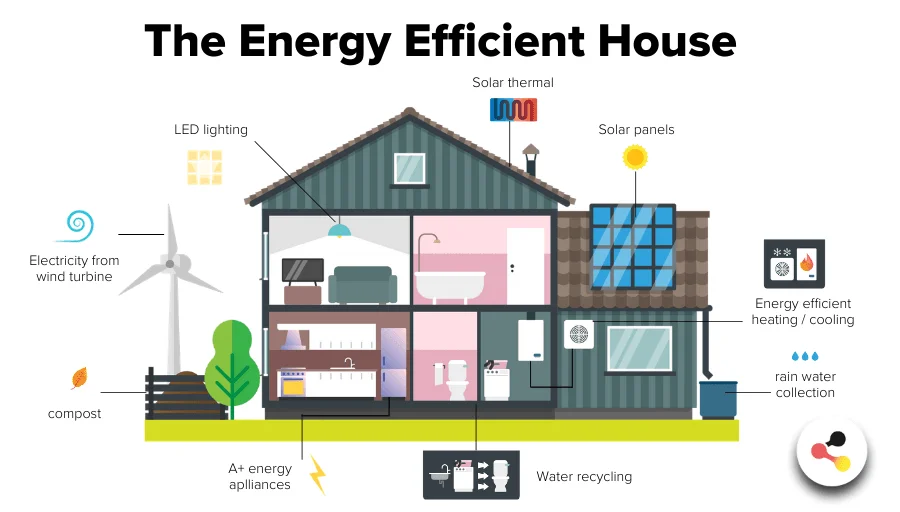
From a buyer perspective, the relevance of Efficiency House 55 is not only about subsidies. It is about predictability. Lower energy consumption reduces operating costs and protects against future regulatory pressure.
In past years, many buyers rushed into high efficiency standards without fully understanding the cost side. Construction and renovation costs rose sharply, sometimes offsetting the financial benefits. In 2026, buyers are more cautious and compare long term numbers more carefully.
Efficiency House 55 sits in a middle ground. It is demanding, but often more realistic than the highest efficiency levels. This is why it reappears in financing conversations.
How KfW loans are combined with mortgages
In a typical financing structure, the KfW loan covers a defined portion of the total purchase or renovation cost. The rest is financed through a standard mortgage.
KfW loans often include an initial repayment free period. This can reduce monthly payments in the early years. For buyers who expect income growth or want more breathing room at the beginning, this can be helpful.
Interest rates for KfW loans are usually fixed for a defined period. They are not always dramatically lower than bank rates, but the combination of lower rates and repayment bonuses can improve the overall financing result.
The key is coordination. KfW applications must be submitted before the purchase or renovation starts. Timing errors are one of the most common reasons buyers miss out.
Impact on monthly payments and affordability
In a higher interest environment, even small improvements matter. KfW funding can reduce monthly payments, especially in the early years of a loan.
More importantly, it can improve affordability ratios used by banks. This can be the difference between approval and rejection, or between a comfortable and a stretched budget.
To understand this effect properly, buyers should always model scenarios. A tool like the Property Investment Calculator helps translate interest rates and loan structures into monthly payments and long term outcomes: https://financeforexpats.de/property-investment-calculator.
KfW funding rarely changes whether a property is affordable at all. But it often changes how comfortable the financing feels.
KfW funding for expats in Germany
Expats often ask whether they can use KfW funding. In principle, nationality is not the deciding factor. What matters is whether the property is in Germany and whether the financing bank is willing to apply for KfW programs.
In practice, expats face two challenges. Documentation and timing. Income verification can be more complex, especially with foreign employers or self employment. And KfW applications require early coordination.
When expats prepare their financing properly, KfW funding can be integrated just like for German buyers. The main difference is that preparation becomes even more important.
Common mistakes with KfW funding
The most common mistake is assuming KfW funding is free money. In most cases, it is a loan, not a grant. Repayment bonuses exist, but they are conditional.
Another frequent error is missing deadlines. If the purchase contract is signed before the KfW application is submitted, funding is usually lost.
Finally, many buyers overestimate energy savings. While efficiency reduces costs, it should be evaluated realistically. Overpaying for efficiency can hurt overall returns.
When KfW funding makes sense
KfW funding makes sense when it fits into a broader strategy. For owner occupiers planning to hold a property long term, lower operating costs and stable financing are valuable.
For buyers comparing locations and property types, tools like the Real Estate Search Engine help identify realistic options before diving into financing details: https://financeforexpats.de/real-estate-search-engine.
For investors, KfW funding can support renovation projects, but it rarely turns a weak deal into a strong one. The property must work without subsidies first.
Next step for buyers
KfW funding 2026 is neither a miracle nor a trap. It is a tool. Used correctly, it can improve financing stability and long term affordability. Used blindly, it creates complexity without real benefit.
If you want to understand how KfW funding fits into your personal purchase plan, a structured review helps avoid costly mistakes. This is especially true for expats navigating the German system for the first time.
You can contact FFE for a personal consultation here: https://financeforexpats.de/contact.